


BOSTON, Massachusetts – In the wake of five years of disruption from LIV Golf, the PGA Tour is betting big on a radical two-track tournament model for 2028. But according to multiple sources close to the negotiations, the ambitious plan is facing significant headwinds — with title sponsors pushing back hard and widespread frustration bubbling among players, tournament organizers, and other key stakeholders.
The proposed structure, briefed to the Player Advisory Council and outlined by CEO Brian Rolapp, divides the schedule into Track 1 (elite signature events) and Track 2 (developmental circuit, essentially today’s Korn Ferry Tour).
The Track 1 schedule would reportedly feature 15-18 regular-season tournaments, contested at iconic venues such as Pebble Beach, Riviera, TPC Sawgrass, Bay Hill, Doral, Harbour Town, and Colonial, among others. The Track 1 stops would boast fields comprised of the Tour’s top 120 players with mandatory cuts, and purses of about $20 million ($25 million for The Players Championship).

Sponsors are reportedly being asked to commit $30 million+ annually to fund these signature flagship events.
Track 2 events, meanwhile, would offer purses in the $8-10 million range and will feature players outside the top 120 which essentially means Korn Ferry Tour-caliber talent.
Despite, lack of star power and no network television coverage (according to reports), these events are being pitched with a hefty price tag of $12-15 million.
Sponsor Pushback and Exits
Insiders say sponsor resistance is stronger than the Tour anticipated. “They’re being asked to pay more for more risk on Track 1 and the same money for less prestige and exposure on Track 2,” one source told New England dot Golf. “It’s a tough sell.”
The recent decision by Rocket Companies to end its sponsorship of the Rocket Classic after 2026 serves as a high-profile example.
Industry observers point to the company’s reluctance to jump into the new tiered pricing as a sign of broader caution.
Multiple other longstanding partners are said to be reevaluating commitments amid the uncertainty.
Internal Frustration Boils Over
Frustration isn’t limited to sponsors. Players, tournament hosts, and officials are voicing serious concerns behind the scenes. Rory McIlroy has publicly questioned the plan, suggesting Track 2 could feel like a “glorified Korn Ferry” and worrying that some historic events like the Canadian Open could lose stature if sponsors balk at the higher fees.
Sources describe wide-spread irritation among stakeholders. “Almost everyone is ticked off,” said one insider. “Players don’t want their schedules upended. Hosts fear demotion to Track 2. The whole thing feels rushed and punitive rather than evolutionary.”
Some insiders even describe quiet murmurs of collective pushback that border on “union-style” coordination among affected parties — a rare development in the traditionally individualistic world of professional golf.
The overhaul aims to restore meritocracy with promotion and relegation elements, larger fields, and more frequent top-player competition. But critics argue it risks undermining the Tour’s core strength: continuity and stability.

For decades, the PGA Tour differentiated itself through its reliable schedule and historic venues. A complex pyramid system introduces volatility at precisely the moment many want reassurance.
LIV Golf Contrast
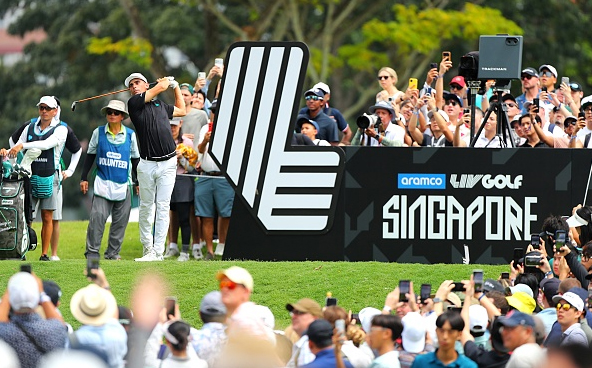
The timing is particularly awkward as LIV Golf, despite its own well-documented financial transition (including the wind-down of primary PIF funding after 2026), continues to showcase resilience.
The Saudi-backed league has demonstrated sponsorship growth, strong event attendance in key markets, and a consistent product that doesn’t require annual reinvention. While LIV Golf faces real challenges in diversifying its investor base, the PGA Tour’s internal turmoil suggests the “steady Eddie” approach it once championed is now under threat from its own ambitious redesign.
One veteran observer summed it up: “The Tour had the deeper infrastructure and brand loyalty. This is still a work in process but betting the farm on a radical restructure instead of doubling down on what made them dominant feels unstable.”
As negotiations continue, all eyes are on whether the PGA Tour can smooth these tensions before 2028, or whether the two-track experiment creates more division than dominance. New England dot Golf will continue monitoring developments closely.
(EDITOR NOTE: This article draws on conversations with multiple sources close to the PGA Tour, sponsors, and players who requested anonymity to speak freely.)