

By STEVE MARANTZ
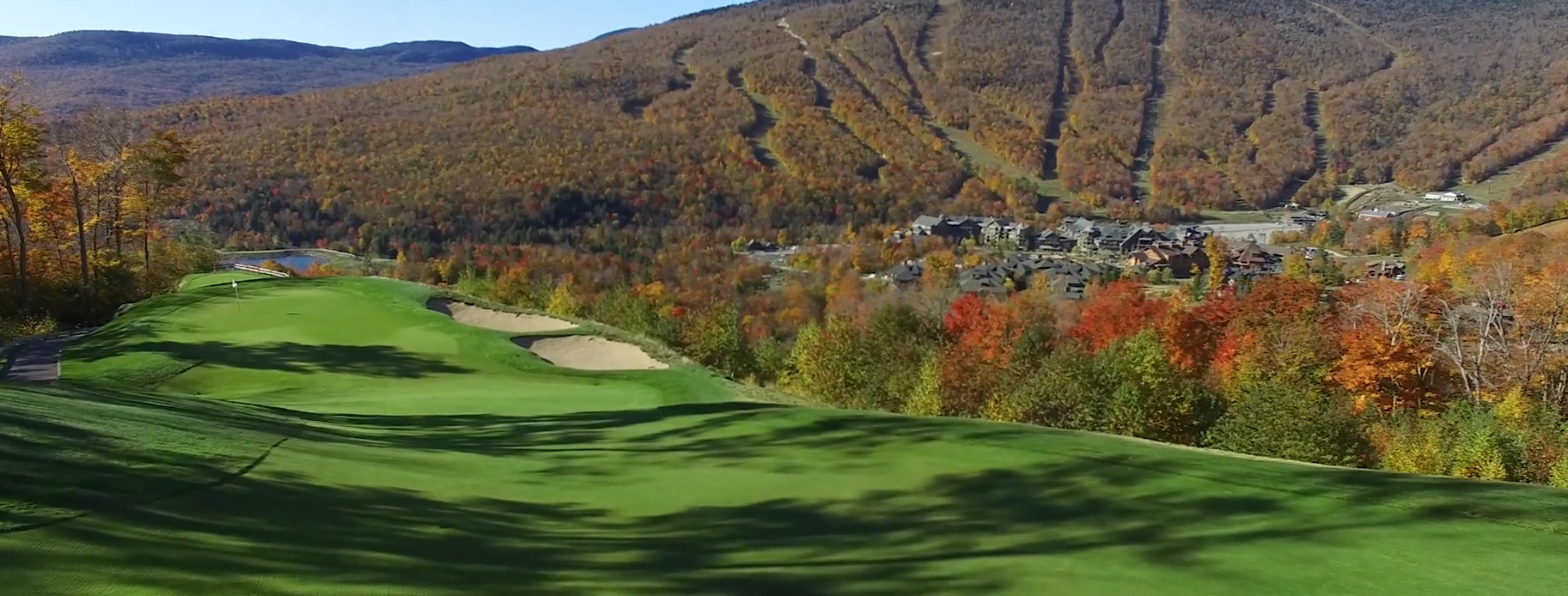
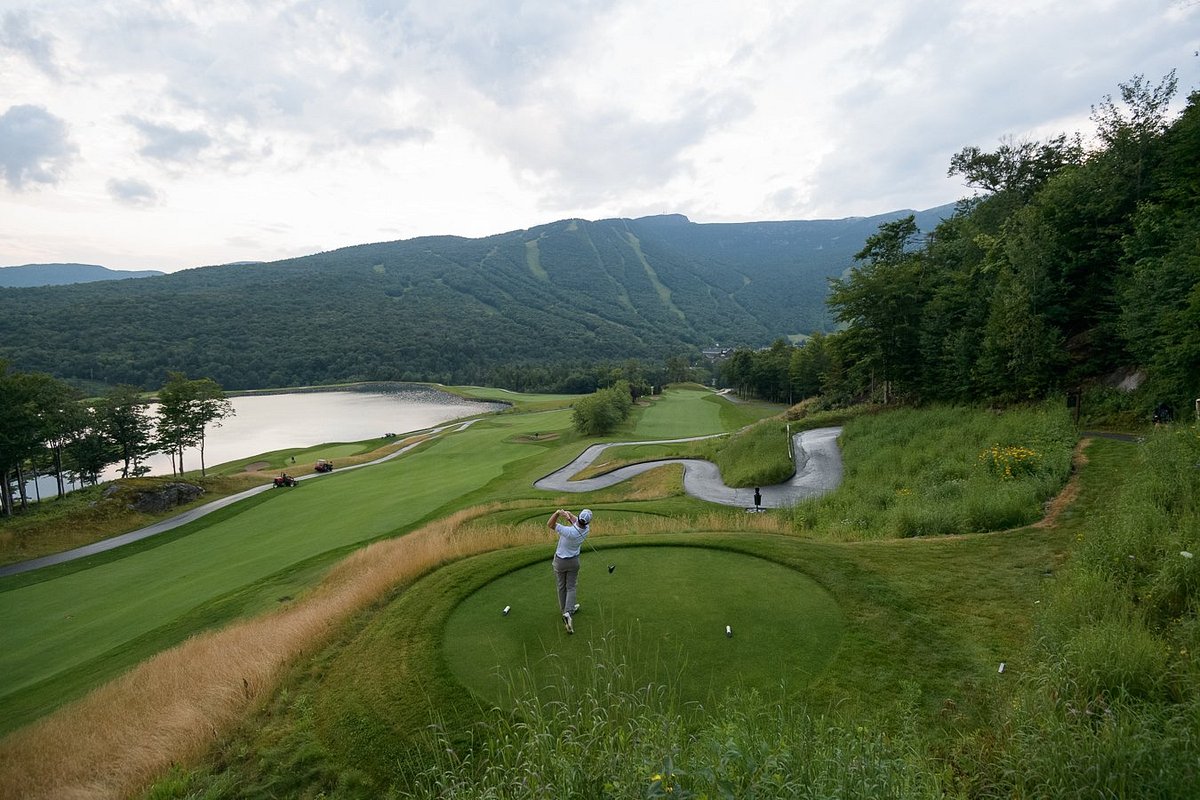
STOWE, Vermont – The Mountain Course at Spruce Peak is a private 18-hole layout near Stowe, Vt., with “majestic views accompanied by the music of mountain streams”, as described by its yardage book.
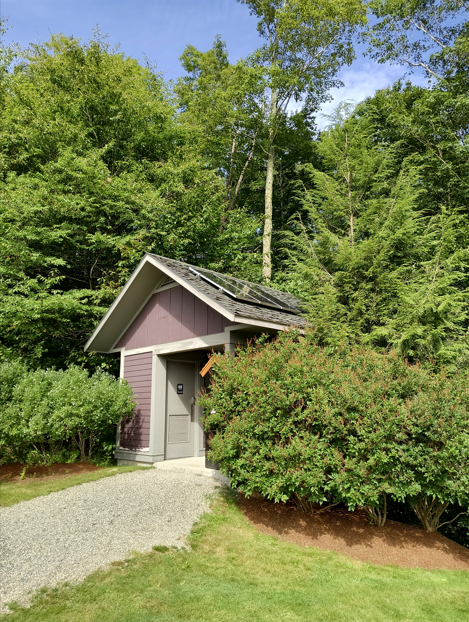
The course proudly heralds an outhouse, behind the 4th tee, as both a “comfort station” and “composting bathroom” with solar-powered lights and pumps.
“It was installed for two reasons,” said superintendent Dave Millar. “One was convenience, not having to run power out there. The other is water conservation, you don’t need a leach field or a septic tank that requires a company to come out and pump it. At the end of every season the solid waste is mixed into our compost pile. The liquid waste is hauled off by a local septic company. We don’t waste water on a leach field. It’s a small contribution to our environmental mindset.”
Spruce Peak’s ‘woke’ outhouse is part of the sustainability movement transforming golf. The course is a certified dues-paying member of Audubon International (AI), a not-for-profit organization that advises golf courses on environmentally-sound operation. Audubon International was founded in 1987, with initial funding from the United States Golf Association, and although it shares a name with the older and better-known National Audubon Society, the two are not affiliated.
Just over 2,000 courses, public and private, in 24 counties — about half of them in the U.S. and Canada — are certified by AI, with emphasis on wildlife habitat management, integrated pest management, chemical use reduction and safety, and water quality management. Vermont’s lone AI-certified course is Spruce Peak. There are 19 certified courses in Massachusetts, 15 in Connecticut, 7 in Maine, 6 in New Hampshire and 2 in Rhode Island.
Spruce Peak’s environmental profile features five acres of tall native prairie grasses, purplish in autumn, and ten acres of golden wavy fescue. Nearly six acres of native wildflowers grow around tee areas where golfers won’t hit into them. Wildflowers sustain pollinators, such as honeybees, increasingly endangered.
“I’ve played on and worked at a lot of golf courses, and this is the first one I’ve been a part of that actively manages a good chunk of land for pollinator habitat,” said Millar.
To be clear, Mountain Course’s appeal is more than environmental. Its 6,411-yard par-72 layout, nestled between Mount Mansfield and Spruce Peak, features strategic and technical challenge. “Perhaps there is no finer collection of great short par 4s anywhere in America,” said its designer, the late Bob Cupp.

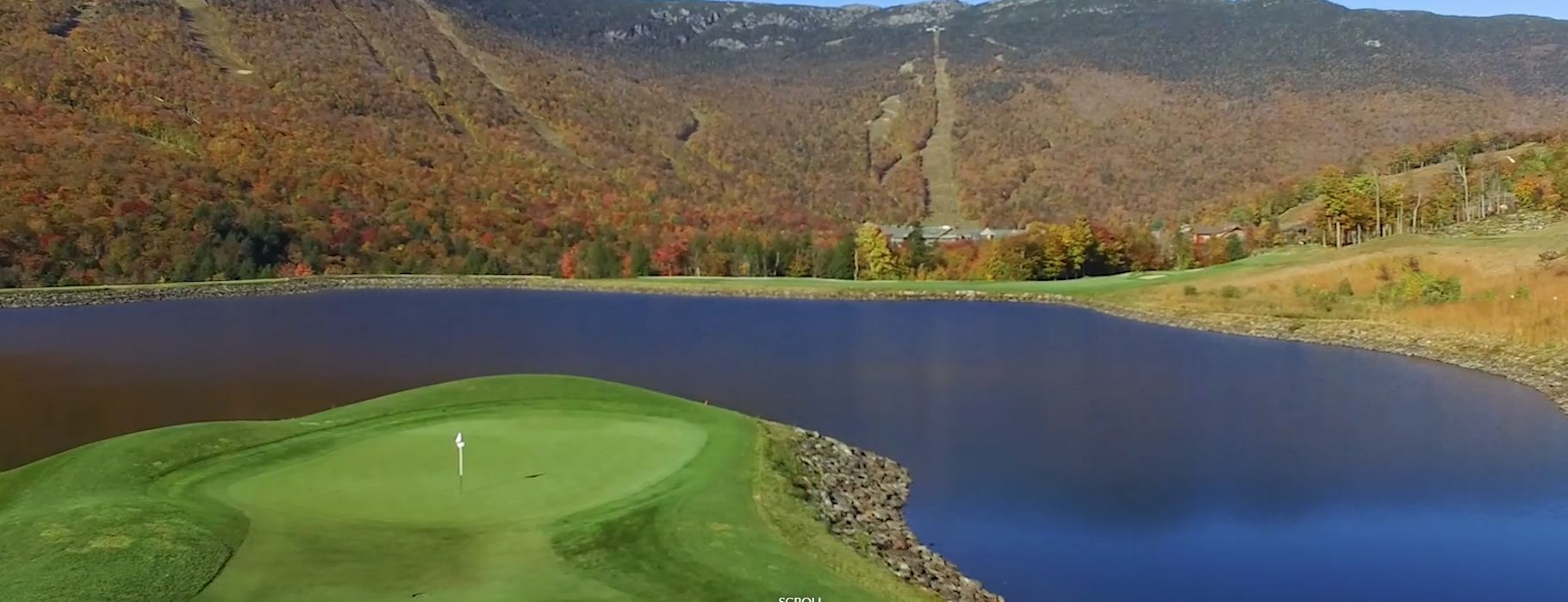
The yardage book alerts golfers to environmental triumphs: Kestrels perched on the first hole; grogs, duck, salamanders, trout, and geese at Peregrine Lake on the sixth hole. On the seventh hole, a fallen tree, where “detritus that falls from exposed roots reintroduces minerals found below the topsoil layer back into the surface ecosystem.” Big Spruce Brook, on the tenth hole, protected by a natural buffer. Tall dead birch trees near the 13th green, known as snags, filled with insect larvae for foraging birds.
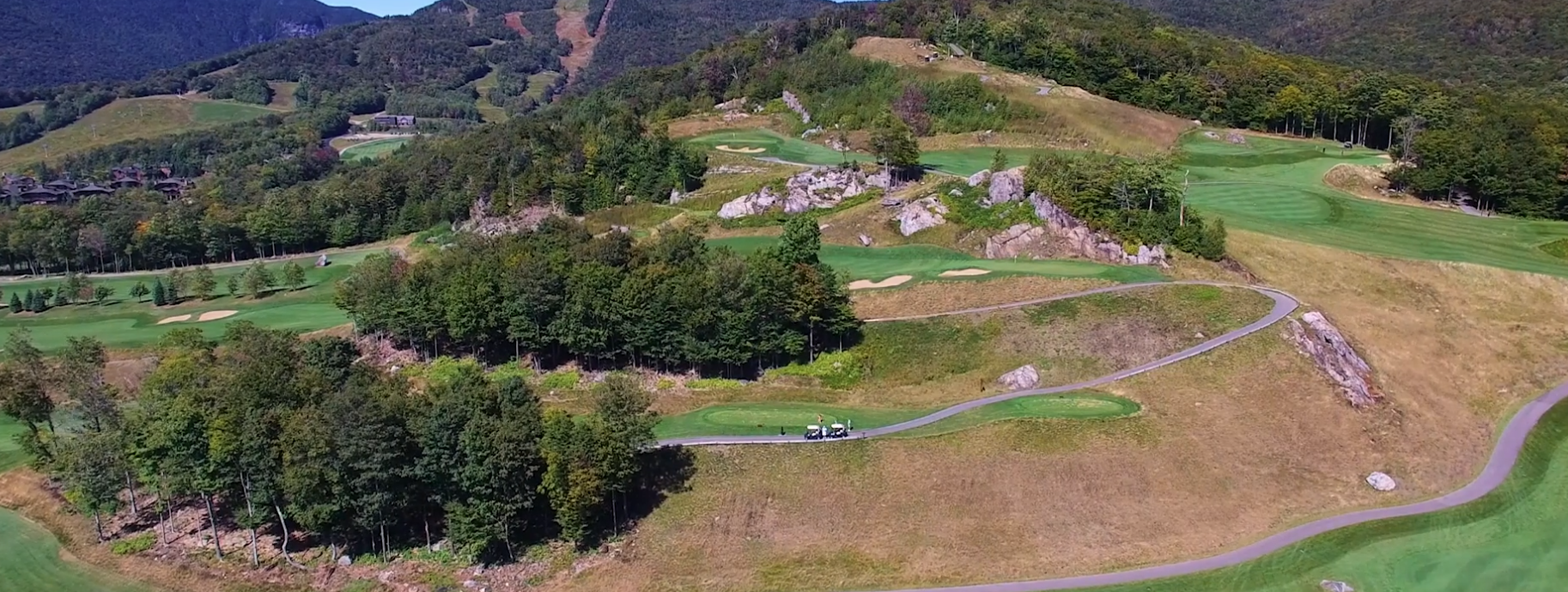
Hovering above a ridge in the middle of 14th fairway, the course’s highest elevation, red-tailed hawks. Near the greenside pull-off on 15, beech trees, habitat for local black bears, with claw marks visible on the trunks.
“We have black bear sitings all the time,” said Kevin Komer, Director of Agronomy for Spruce Peak and Stowe CC. “They’re walking through these wildlife corridors that are created as part of the (AI) program.
“We put out signs on how to encounter a black bear. You say, ‘Hi Bear’ and you look at them and talk to them, make them aware you’re there. You don’t want to spook them.
“We have lots of moose sitings. Deer, turkeys, lots of raptors, red-tail hawks, kestrels. Lots of rock outcroppings, places for them to hunt for mice.”
Drainpipes from fairways and greens run a minimum of 50 feet beneath ‘vegetative buffer’ before they reach a waterway or stream. Vegetative buffers create wildlife corridors for deer, turkeys, raptors, hawks, moose, and, yes, bears.
Underlying all of it are the course’s ‘integrated pest management plan’ which details pesticide application for insects and fungal pathogens, and the irrigation system, tuned for efficient use of water. Both are crucial to sustainability.
Before Millar, 42, became a superintendent he worked for the U.S Forest Service as a hydrologist on a watershed project in California, as a research technician for the Biosphere 2 project in Arizona, and for an irrigation company in Colorado. His college major was environmental science.
Spruce Peak is his sixth course, with previous jobs in Connecticut, Nevada, Colorado and Vermont. Its Audubon International certification, he said, was an incentive to work there. One of his tasks is preparing an annual report for Audubon International detailing tests for pesticide and nutrient levels.
“Lowering our environmental footprint is always in the back of my mind, no matter what I’m doing,” said Millar. “On the face of it golf courses could be considered wasteful. Anywhere between 80 to 100 acres that could be forest or grassland. But the simple fact is that golf courses exist, and if you’re going to manage one you might as well do it as environmentally responsible as you can.”
Beyond Spruce Peak and Audubon International the tentacles of sustainability spread far and wide. Vineyard Golf Club on Martha’s Vineyard is completely organic, one of just a few in existence. The GEO Foundation for Sustainable Golf, based in Scotland, works with more than 1,000 golf facilities and tournaments across 75 countries, with a stated mission to “further improve golf’s social, environmental, and climate contribution.”
Golf is working to be safer and smarter. Its “environmental sustainability” movement, encouraging judicious use of chemicals and water, reaches back almost 40 years. As the earth grapples with climate change, lush greenery traditionally enjoyed by golfers consumes ample water and chemicals which can threaten natural ecosystems and human health. Sustainability, in theory, reduces water and chemical usage, and is healthier for the environment and for those who work and play at golf.
Millar belongs to the Golf Course Superintendents Association of America (GCSAA), whose 20,000-plus members adhere to regulation set by the federal Environmental Protection Agency (EPA). GCSAA policy states: “Pesticide production is highly regulated in the U.S. through the Federal Insecticide, Fungicide and Rodenticide Act (FIFRA) which requires that pesticides cause “no unreasonable adverse effect” to humans or the environment – including water quality and aquatic species. Pesticides used to maintain healthy golf course turf have been thoroughly tested by EPA. As a result, use labels are crafted to protect these resources and must be strictly followed: the label is the law.”
Since 2003, the GCSAA has required members to either obtain a state pesticide applicator license or pass a GCSAA exam on Integrated Pest Management (IPM).
In 2017 the GCSAA launched its Best Management Practices (BMP) initiative, to “ensure protection of human health and the environment and demonstrate the industry’s commitment to environmental stewardship.” By 2020 all 50 states had a BMP program in place.
Best Practices for pesticide management address risk assessment, storage, inventories, mixing/washing stations, personal protective equipment (PPE), containers, emergency preparedness and spill response, sprayers and nozzles, and record keeping.
“Does the world need golf courses?” Millar said. “Probably not. The planet and ecosystem are fragile, we’ve seen that with global warming. Golf courses are big parcels set up specifically for recreation. They’re going to exist whether I want them to or not, so we need to manage them as environmentally conscious as we can.”
https://www.sprucepeak.com/play/mountain-golf/
Steve Marantz is a Boston-based author/journalist/podcaster with experience in television and print media. Steve can be reached at marantzsteve@gmail.com or visit his website https://stevemarantz.com/about/