

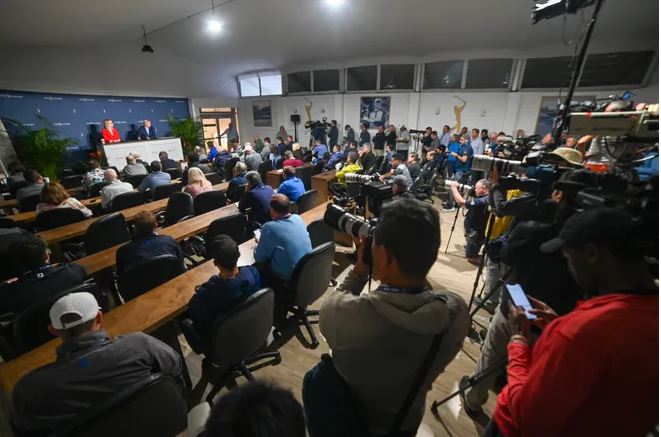
BOSTON, Massachusetts – If you’re paying attention to golf at all, you’ve noticed a few changes about the narrative from the mainstream golf media.
Want to know who controls the narrative, then read on? For the past five years the lamestream golf media had a disorder concerning LIV Golf. Recently, though, some are in recovery mode from LGDS – LIV Golf Derangement Syndrome.
The big boys in golf media with LGDS are: Brandel Chamblee (Golf Channel), Eamon Lynch (Golfweek, Golf Channel), Jim Nantz (CBS), Doug Ferguson (AP), Geoff Shackelford (Quadrelateral) Dan Rappaport (Skratch), Paul McGinley (Sky Sports, Golf Channel), Rich Lerner (Golf Channel), Johnson Wagner (CBS), Patrick MacDonald (CBS), Jamie Diaz (Golf Channel, Golf Digest), Andy Johnson (Fried Egg), David Rumsey (Front Office), Rich Eisen (ESPN), Damon Hack (Golf Channel), Rex Hoggard (Golf Channel), Jim Nugent (Global Golf Post),Trey Wingo (YouTube), Ryan Lavner (Golf Channel/Podcast), Chad Mumm (Pro Shop/Skratch), Smylie Kaufman (NBC/Podcast), Kyle Porter (CBS Online), Joel Beall (Golf), Shane Ryan (Golf), Jay Busbee (Yahoo), Gabby Herzig (The Athletic/NY Times), Brody Miller (The Athletic/NY Times)Alan Shipnuck (Skratch), Brian Katrek/John Maginnes and Jason Sobol (PGA Tour Radio)(PGA Tour Radio) and No Laying Up(X).
What’s shameless is that some of these bombastic chumps are the same ones who voted to give Golf Digest writer Dan Jenkins a first-place writing award in 2015 for concocting a fake interview with Tiger Woods titled “My (Fake) Interview with Tiger Woods.” Does this validate GWAA as the original fake news operandi?
With LIV Golf banished, at least temporarily, much of golf media seemingly forgot one of journalism’s favorite words: contrarian.
Seems, now suddenly, all the king’s men and all the king’s horses are one again.
With LIV Golf weakened, diminished, restructuring, dying, dead, mostly dead, or whatever stage of grief the golf establishment has currently assigned it, an interesting transformation is taking place across golf media.
The PGA Tour is once again fair game and under the microscope.
Not occasionally. Not carefully. Almost daily.
The 24-7 Anti-LIV Golf writers are questioning Brian Rolapp’s vision. They’re picking apart the new two-tier Tour. They’re wondering whether anyone can understand the qualification system. They’re second-guessing Presidents Cup selections. They’re examining whether the Presidents Cup itself has become competitively stale. They’re questioning the revamped FedExCup playoffs. They’re even wondering what happens to the DP World Tour under the Tour’s new structure.
Healthy skepticism is everywhere, which begs the question: Where the hell have you been?
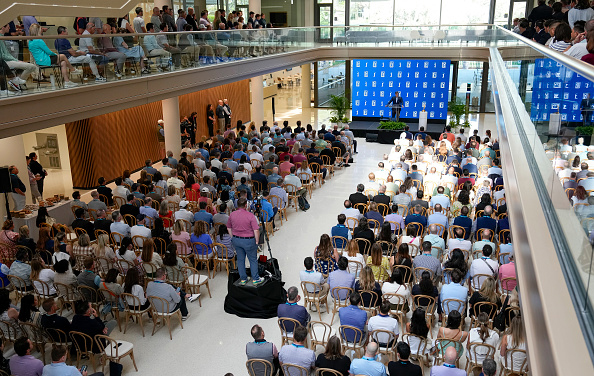
For five years, while LIV Golf represented the first serious competitive threat to the PGA Tour’s monopoly, an enormous portion of the golf-media ecosystem turned disrespectful about turning the same level of skepticism toward the PGA Tour.
Scrutiny from the media matters, but what we witnessed for five years was closer to golf media camouflaged as palace guards protecting the inept and over matched Jay Monahan and the Ponte Vedra syndicate.
PGA TOUR/BRIAN ROLAPP ARE SUDDENLY FAIR GAME
Example No. 1, take the PGA Tour’s new proposed 2028 structure.
Rolapp arrived promising a simpler, easier-to-follow product.
The answer is now a bifurcated professional golf ecosystem featuring a roughly 120-player Championship Series, a secondary Challenger Series, promotion, relegation, multiple eligibility categories, new pathways and a postseason structure that itself will change dramatically.
The golf media has noticed.
GOLF.com recently posted an article to unpack 10 notable consequences hidden inside the qualification criteria. Golf Digest has examined the unanswered questions surrounding the “reimagined” Tour. Even the relationship between the DP World Tour and PGA Tour remains unsettled enough that the existing pathway for European players into the American circuit is still being worked out.
Probably, the biggest unanswered question moving forward is what will the PGA Tour look like if FedEx cuts back on it’s $100 million year commitment?
If CEO Rolapp tells fans his mission is simplification and the resulting structure requires several thousand words of explanation, the golf media must scrutinize.
Again, this begs the question: Where was this instinct from the mainstream golf media for institutional skepticism during the height of the LIV war?
There was a time not long ago that the PGA Tour would announce another emergency response to LIV, another dramatic strategic shift, another purse increase, another eligibility change, another alteration to its schedule and another tweak to its competitive structure — and the soldiers in media would uniformly frame the story as the Tour “evolving.”
Bashing of LIV Golf by the mainstream golf media has stopped. Apparently, golf media is rectifying its ‘Obsessive Compulsive Behavior’ of writing more reasons to hate LIV Golf.
PRESIDENTS CUP SKEPTICS
It’s worth noting the golf media is suddenly comfortable questioning the Presidents Cup dysfunctional operational process.
J.J. Spaun finished 10th in the American standings, had won the 2025 U.S. Open, won again at the Texas Open in 2026 and still didn’t receive one of Brandt Snedeker’s six captain’s picks.
Spaun responded by going to Wentworth and winning the BMW PGA Championship.
Golf Digest called his omission “bizarre,” reported on the apparent communication breakdown between Spaun and Snedeker, and this week noted that Snedeker was already being second-guessed before a ball had even been struck at Medinah.
Question the captain. Question the process. Question why established team veterans like Justin Thomas and Patrick Cantlay continue receiving discretionary selections.
Question whether the system actually rewards performance.
Question whether the “good old boys” element of American team golf deserves examination.
But notice how comfortable everybody suddenly is challenging a PGA Tour-controlled product.
And it goes beyond Spaun.
Writers are asking more uncomfortable question about the Presidents Cup itself: What exactly has happened to international golf?
Golf Digest pointed out this week that when the Presidents Cup debuted in 1994, eight eligible international players were ranked inside the world top 20. Entering the 2026 matches, there is just one. And, of course, no world-class LIV Golf talents invited such as Cam Smith or Joaquín Niemann.
GOLF.com noted another rather glaring statistic: the International team is 1-13-1 all time in the Presidents Cup and has lost the last ten editions entering Medinah.
Those are not promotional pronouncements. They are existential ones.
Is this competition healthy? Is it balanced?
What is the Presidents Cup supposed to become?
Finally, those questions are acceptable again with LIV Golf off the radar screen.
FEDEX CUP GETS CRUCIFIED
For 20 years, the PGA Tour and most golf media has desperately tried to convince everyone that the FedExCup playoffs carry enormous importance.
Now the Tour is blowing it up again.
Beginning in 2028, the postseason is expected to transition into a dramatically different format featuring a 90-player opening stage followed by two weeks of match play. The top 32 will move into round-robin groups before 16 players advance to the final stage.
Once again, golf media is asking questions.
Will fans understand it? Will match play produce the right champion?
What happens if the biggest stars are eliminated early?
Does this actually simplify the product? What happens to traditional stroke play?
All fair. All worthwhile and exactly the kinds of questions credible golf journalists should ask.
The point isn’t that the criticism is wrong. The point is that it is suddenly everywhere.
HIDDEN AGENGA EXPOSED
This is not an argument that journalists were obligated to support LIV Golf.
LIV deserved scrutiny and some of the criticism was deserved. But good journalism isn’t supposed to operate on a one-in, one-out basis.

Scrutinizing LIV Golf never required suspending skepticism toward the PGA Tour. Yet during the period when LIV Golf posed its greatest threat, that skepticism was considerably harder to find.
Now? Apparently the coast is clear.
LIV 1.0 is over. Its biggest competitive threat is diminished and the PGA Tour survived, with players reaping paychecks with lots of zeroes at the end.
And wouldn’t you know it — golf journalism has rediscovered its edge.
ACCESS EQUALS BUM-KISSING
There is also an uncomfortable structural reality golf media rarely enjoys discussing.
The PGA Tour is not merely something golf journalists cover. For many of them, it is the ecosystem in which they operate. Careers can effectively orbit the PGA Tour without technically being employed by it.
Does that mean every reporter consciously protected the Tour?
There were few journalists who aggressively questioned both sides throughout the LIV conflict. The above mentioned media can do better moving forward when LIV 2.0 resurfaces in a few months.
What happened in golf media confirms a recent Gallop poll that Americans’ overall trust in media stands at a record low of 28%!
(Jeff Smith contributed to this report)