
by GEORGE MCNEILLY
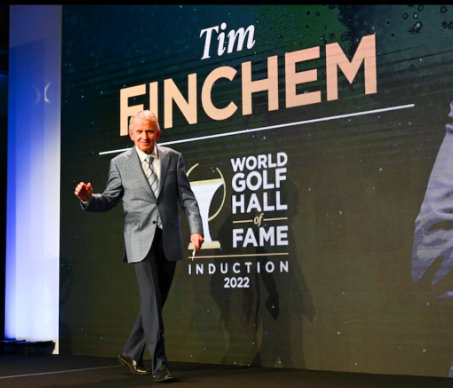
ATLANTA, Georgia – The announcement of a reimagined philanthropic strategy, accelerated by Tim and Holly Finchem’s $13 million gift, is more than a charitable milestone. It may also signal how the PGA TOUR will define the values of its next era—one in which competitive opportunity, community impact and player accountability are more closely aligned.
As the industry prepares for a new competitive structure in 2028, including tiered series and a just revealed two-week match play TOUR Championship, it continues to grapple with a lingering question: What should a meaningful path back look like for players who left for the riches of LIV Golf and may now seek reinstatement?
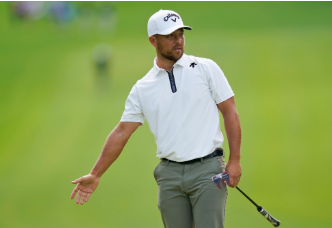
I posed that question to 10-time PGA TOUR winner Xander Schauffele as he prepared to compete in this week’s finale in Atlanta.
“It’s a really tricky situation, the first of its kind in our sport; there’s a fracture, and now there’s going to be some sort of gathering again on one tour,” Schauffele said. “So, if you think of all the parties involved, it’s still a fluid situation in terms of who you can keep the happiest.”
Any eventual answer cannot rest solely on tournament access, eligibility rules, or financial penalties. Those considerations matter—especially for the players, tournaments, partners, and communities that remained committed to the PGA TOUR through an epically disruptive period. But there is also an opportunity to frame a return not merely as reinstatement but as a renewed commitment to a greater purpose.
That is where the PGA TOUR’s strengthened charitable platform could be consequential—if developed with clarity, consistency, and tremendous care.
The revised strategy could offer players, particularly those seeking to rejoin the fold, a clear and lasting way to demonstrate their investment in golf’s broader ecosystem. Such participation should not be viewed as punishment, a toll for reentry, or an ill-advised public-relations stunt meant to erase past divisions. Rather, it could be one element of a credible, values-based return strategy.
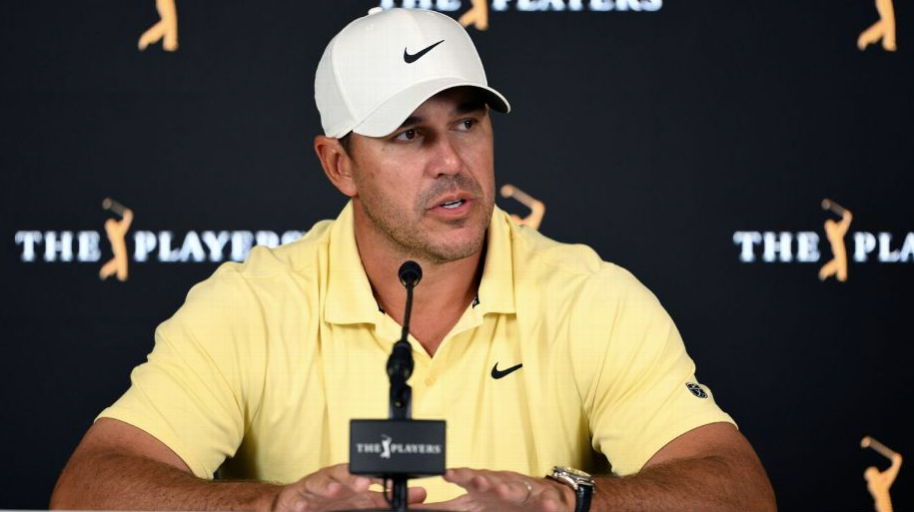
Brooks Koepka’s reinstatement earlier this year through the TOUR’s limited-window Returning Member Program offered an early indication of that possibility. His welcome included a $5 million charitable commitment, along with competitive and financial restrictions. The TOUR subsequently said that the remaining $2.5 million of that commitment would be distributed among charitable beneficiaries designated by 99 eligible PGA TOUR members—a particularly notable expression of player-led engagement.
Any future donation requirement, however, should not be mistaken for a substitute for accountability, nor was Koepka’s arrangement presented as a uniform policy for future returning players. Still, it suggests that philanthropic investment can be part of a broader conversation.
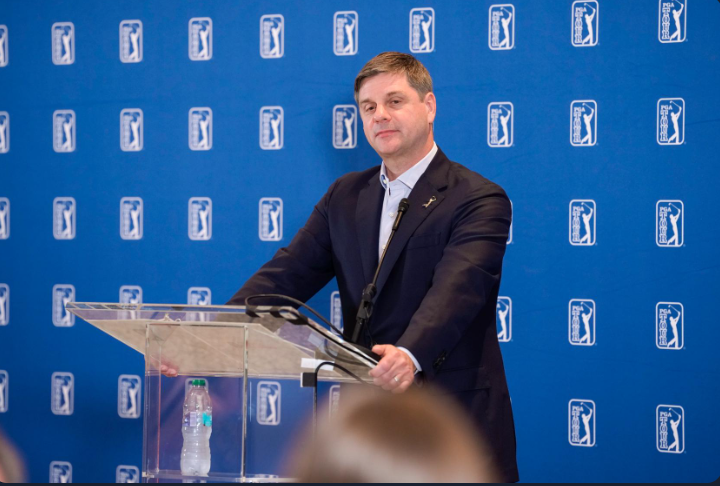
PGA TOUR CEO Brian Rolapp underscored that premise Tuesday when I asked whether players returning from LIV might make sustainable charitable commitments—not as penalties, but as a way to reconnect with the communities that supported them.
“The efforts to involve our players, our member in the philanthropic efforts is an important one,” Rolapp said. “They do quite a bit on their own, through their own foundations. It’s pretty impressive.”
He cited Koepka’s commitment as an example of what player-driven impact can look like:
“As Brooks came back and his $5 million donation, as we see that put to work, it was a really good example of players putting forth causes that are important to them.”
Most important, Rolapp did not describe charity as a disciplinary tool. He described it as central to the TOUR’s forward-looking model, giving players a larger voice in the process.
“The whole idea of our charitable efforts is not only to increase the scale and the impact but also to have our members have more of a voice,” Rolapp said. “They are clearly outstanding people, and they have their own interests, and they have their own ability to make impacts.”
That is the opportunity now before the TOUR. A more fully defined approach would avoid treating charitable giving as a fine. Instead, it could invite returning players to make sustained commitments through PGA TOUR Charities, tournament markets and established organizations such as First Tee, Folds of Honor and many others.
Those investments would support youth development, access to the game, veterans and service initiatives, health and well-being programs, and the local nonprofits that tournament communities have supported for years. PGA TOUR Charities’ evolving platform is expected to focus national efforts on health, youth, access and service while retaining a local-community emphasis.
“This TOUR does a lot for the communities that we play in, and that’s been our big initiative ever since I’ve been on the PGA TOUR,” Schauffele added. “I trust our management is in a really good spot to handle that.”
In speaking with Schauffele and other players over the last months, the question in my mind has shifted from, “What does a player owe to come back?” to a more constructive question: “How can a returning player help strengthen the game and the communities to which he is returning?”
That distinction matters.
A player who left for LIV Golf should not be able to purchase a pardon through a single donation. Nor should philanthropy become a punitive mechanism that turns charitable beneficiaries into bystanders in a business dispute. The stronger approach would pair charitable commitments with transparent reinstatement standards, appropriate competitive consequences and a long-term plan for player engagement extending well beyond an initial return announcement.
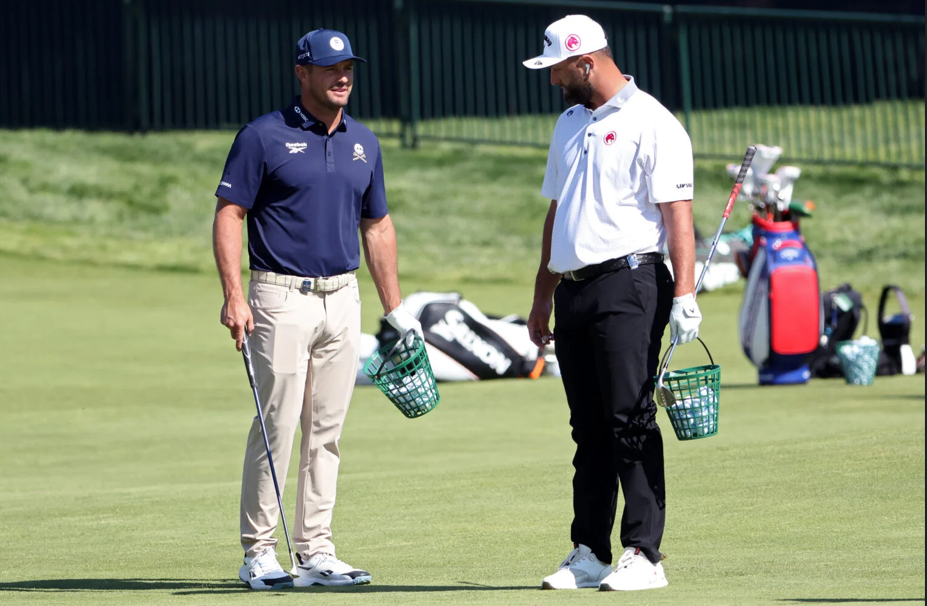
Rolapp has also been clear that a player’s charitable activity would not replace the basic threshold for a potential return. He said the TOUR has no current plans to resurrect the Returning Member Program and that any player seeking consideration must demonstrate he is fully free of LIV-related contractual commitments or “tail obligations.” In other words, philanthropy can complement a way back, but it cannot create one on its own.
For decades, the PGA TOUR’s nonprofit status and charitable legacy have been among its most distinctive strengths. Since my youth, the TOUR has maintained that “the leading money winner on the PGA TOUR is charity.” Its events, volunteers, partners and communities have generated more than $4.4 billion for more than 3,000 charities.
Tournament communities unite volunteers, sponsors, local nonprofits and fans to transform golf’s popularity into measurable local impact. That mission carries added importance as the TOUR continues navigating the implications of PGA TOUR Enterprises, the for-profit business venture introduced in 2024. The organization’s next phase will require a clear understanding of how commercial growth and charitable purpose can reinforce, rather than dilute, one another.
The Finchem family’s gift adds momentum to that case. Rolapp called the TOUR’s charitable impact “real and a powerful model” and said the shared responsibility now is to make it “even greater and easier for our players, partners, and fans to rally around.”
If golf’s next chapter is to be unified, a credible pathway home for former LIV Golf players could include a sincere, sustained commitment to the people and places that make the PGA TOUR’s tremendous charitable legacy possible.
Charity should not be the price of admission. But it can be a meaningful expression of renewed alignment—and perhaps one of the most durable ways for returning players to show they are prepared to invest in the future of their game.