
by LARRY HALL
The following lyrics open “Gimme Shelter” by The Rolling Stones and have long been associated with the Vietnam War:
Ooh, a storm is threatening
My very life today
If I don’t get some shelter
Ooh yeah, I’m gonna fade away
It’s just a shot away
It’s just a shot away
With only a few carefully chosen word changes, the song could just as easily serve as an anthem for golfers caught in a thunderstorm.
Every golfer knows the moment. The sky darkens. The air turns heavy. A low rumble rolls across the fairway. Somewhere in the distance, the clubhouse horn waits to ruin a perfectly good round.
Why is it that the horn always sounds when you are playing well? Never during a triple bogey spiral. Never while you are searching for your fourth ball in the hay. No, it waits until you are even par through twelve and feeling invincible.
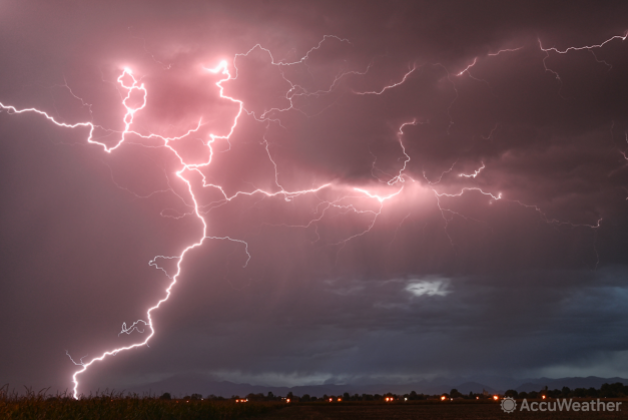
Then comes the internal debate, golf’s version of risk management. Do I have time to finish this hole? Or do I need to head in now?
Often, when the horn sounds, the sun is still shining. The black cloud looks miles away. No one has seen any lightning. The danger feels theoretical, like did my ball really oscillate.
And if only two holes remain, the conversation becomes inevitable. “If we play fast, can we finish before it gets here?” Those are words that have introduced many bad decisions.
Golfers are eternal optimists. We believe in miraculous putts, heroic recoveries, and the possibility of outrunning a thunderhead moving at 30 miles per hour. After all, it is “just a storm away.” Until it’s not.
Lightning is extremely dangerous. While a strike usually just injures a person, a direct hit can be fatal. For that reason, golf course owners should take lightning seriously and do their best to clear players before danger arrives. Recent litigation has shown that courses may be liable when failing to act promptly to provide on course golfers with lightning alerts.
Some courses lack sophisticated detection systems and rely on the 30/30 Rule:
• If the time between seeing lightning and hearing thunder is less than 30 seconds, the storm is close enough to pose a threat.
• Wait 30 minutes after the last lightning flash or final thunderclap before resuming play.
Other facilities have adopted detection systems such as ThorGuard or Perry Weather. These systems typically sound the horn automatically when lightning is detected within roughly eight miles.
Many golfers hear “eight miles” and think that sounds like the next county. Historically, meteorologists and golf operators have relied on the “better safe than sorry” approach. For me, when that horn sounds, it should mean real danger is approaching, not that a cloud eight miles away is thinking about coming my way.
But what if there was a better way to detect lightning and alert golfers?
I may have found one at the PGA Show. Walking the aisles, I noticed a booth with an AccuWeather sign overhead. I was curious. What exactly was a weather company selling at a golf show? Since AccuWeather happens to be my favorite golf forecasting source, I stopped.
Jacob Hinson wasted no time introducing himself. Like a proud papa, he shared, “We’ve developed a more accurate lightning detection system that gathers weather data directly around your golf course,” he said. “And we’re giving away the system free.”
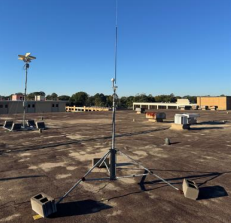
The AccuWeather Lightning Network (AWLN) system includes a computer size ground unit and a rooftop antenna. The equipment is provided at no cost to any golf course willing to install it and share localized weather data. In return, the course receives more precise lightning detection specific to its property via their SkyGuard alert warnings and may avoid shutting down play for strikes that are miles away and moving in another direction. SkyGuard alerts are offered at a discounted rate if a course has the AWLN system.
More playing time for golfers. More revenue for the course. A rare win for everyone.
The broader implications are even more interesting. Consider a mid-sized city with perhaps a dozen weather detection systems in place. The city I live in has more than 50 golf courses. If even half installed the AWLN system, that would mean 25 additional course-specific detection points feeding real-time data into the system.
Outdoor sporting events, concerts, youth leagues, and even Fourth of July picnics could benefit from more accurate warnings.
Living in Florida, I immediately wondered about hurricanes. While SkyGuard is relatively new and comprehensive hurricane data is still limited, I did find information regarding tornado events. That’s a mini-hurricane, right? According to AccuWeather, during recent tornado activity, SkyGuard issued alerts 16 minutes before impact, compared to eight minutes from the National Weather Service.
Eight extra minutes may not sound like much when you are reading about it in a magazine. But, it feels very different when you are standing outside watching a funnel cloud approach.
After reviewing the information, it appears AccuWeather may indeed have built a better mousetrap. If I owned a golf course, I would seriously consider installing a free AWLN system. For all the golfers reading this article, please share it with your golf course owner/operators and suggest they explore the AWLN system and SkyGuard alerts by AccuWeather..
(Larry Hall, a Jacksonville, Florida-based golf writer, is a member of Golf Heritage Society, Golf Writers Association of America, Historical Writers of America, International Network of Golf and Golf Travel Writers of America. He can be reached at: bgtriptips@gmail.com)